 By Dan Ward
In this story:
- What are Japanese flower arranging classes?
- What happens in a Japanese flower arranging class?
- Is Ikebana easy for beginners?
- What do you take home – and is it worth the money?
- Is it a good social craft? What occasions work best?
- Japanese flower arranging classes worth trying today
- Top tips to make the most of your first class
- Ready to try Japanese flower arranging classes?
Whether you're planning a fun afternoon out, looking for a new social hobby, or searching for flower arranging classes that are a bit different from the usual bouquet-stuffing, Ikebana might be exactly what you need. If you've spotted those elegant, minimal floral displays on your social feed and found yourself wondering what on earth they are – welcome. You've just discovered Ikebana, the ancient Japanese art of flower arranging, and you're in very good company. This guide covers everything you need to know before you book, from what Ikebana actually means to what to expect on the day.
What are Japanese flower arranging classes?
Ikebana (pronounced ee-keh-BAH-nah) is Japan's traditional art of flower arranging, and it's been around since the sixth century. Buddhist monks first developed the practice as a form of floral offerings for altars, and over time it grew into a refined discipline studied by millions of people worldwide.
Unlike a typical Western floristry class – where the goal is usually to pack a vase with as many beautiful blooms as possible – Ikebana is about restraint, balance, and intention. Every single stem is placed deliberately. Space and emptiness are considered just as important as the flowers themselves. That thoughtful philosophy is a big part of what makes it so fascinating (and so quietly addictive once you get started).
In a nutshell, Japanese flower arranging is less about creating a big, lush display and more about telling a story with a few carefully chosen stems.
Key Ikebana Terms Worth Knowing
You don't need to memorise a glossary before you walk through the door, but a few key words will help you feel at home in class:
- Ikebana – The name of the art itself, meaning 'living flowers' or 'making flowers alive'.
- Kenzan – The 'flower frog', a small spiked metal disc that holds your stems in place in the container.
- Moribana – One of the most common beginner styles, using a shallow dish and a kenzan.
- Nageire – A freer style where stems are placed in a tall vase without a kenzan.
- Shin, Soe, Hikae – The three main stems in a traditional arrangement, representing heaven, humanity and earth.
What happens in a Japanese flower arranging class?
Arriving and getting set up
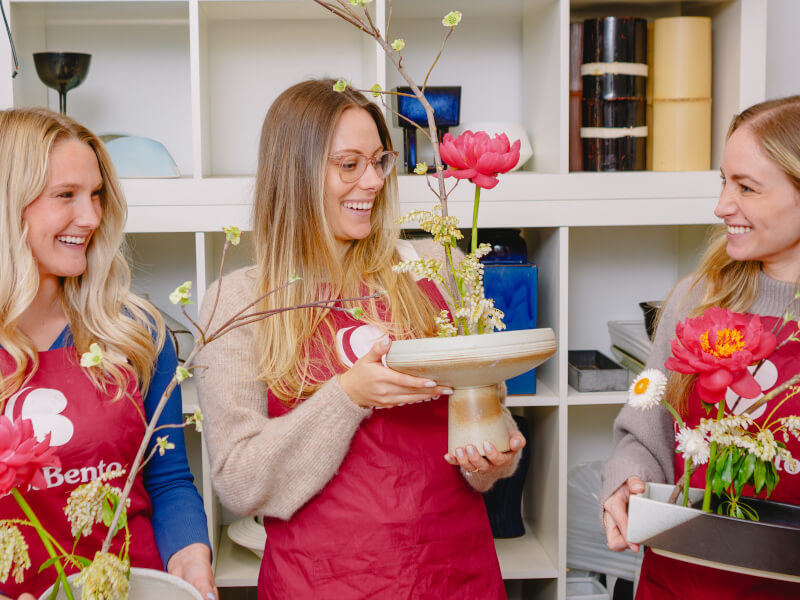
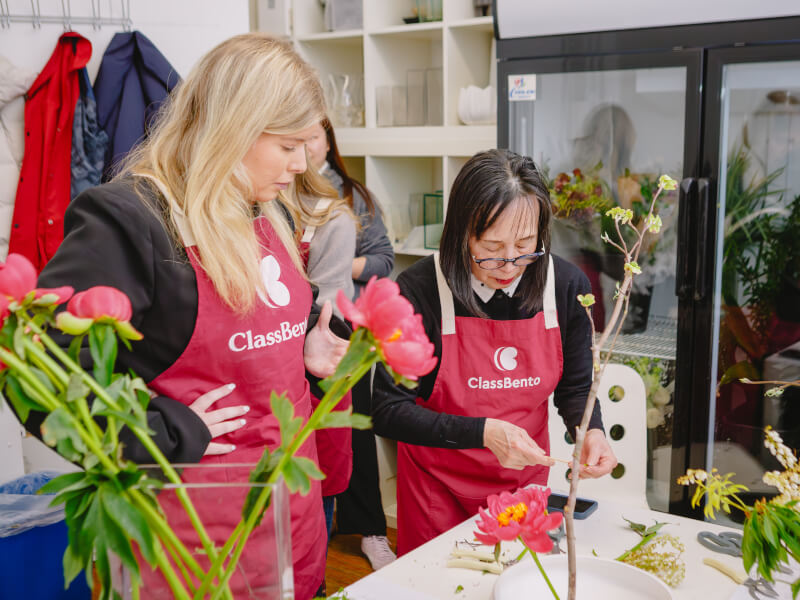
Most Japanese flower arranging classes run for around two hours and are kept deliberately small – usually no more than ten people per session. That's part of the charm. You'll be greeted by your instructor, shown to your workspace, and introduced to your materials: a selection of seasonal branches, stems and flowers, a kenzan and a container.
The basics of Ikebana arrangement
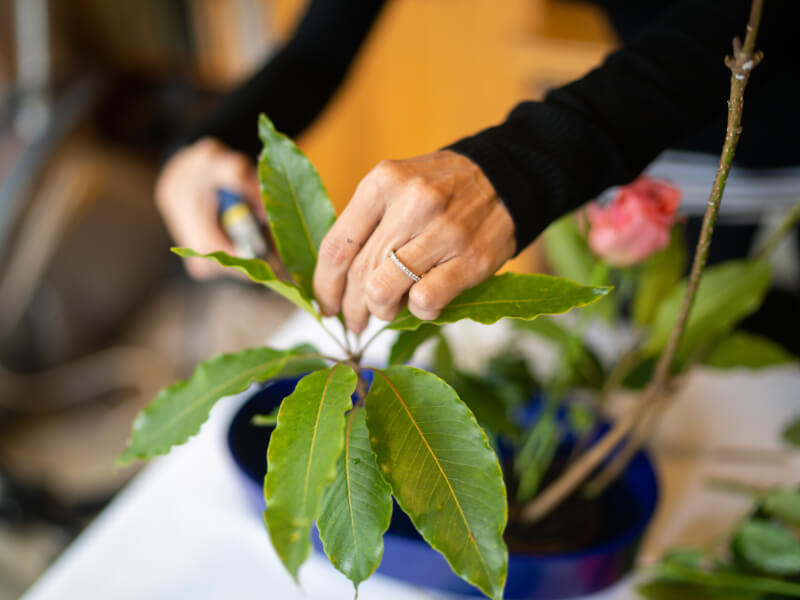
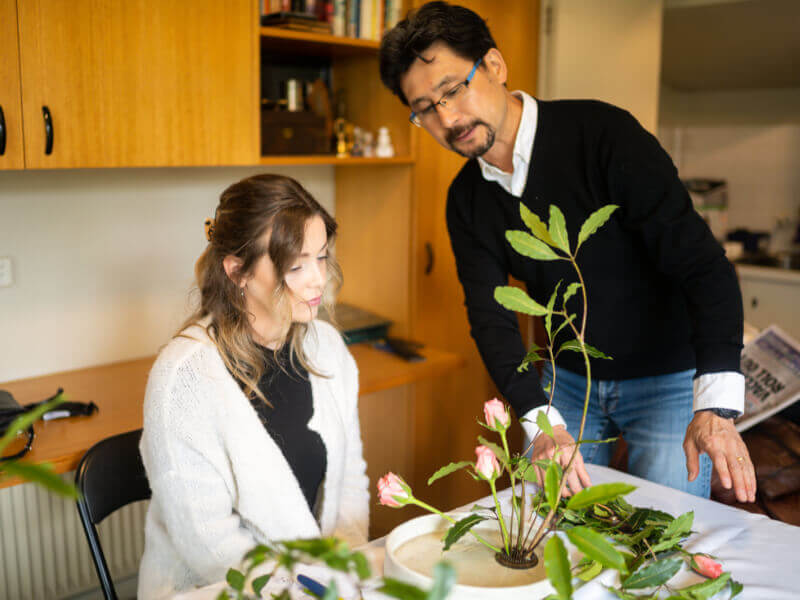
Your teacher will walk you through the basic principles of Ikebana: the three main lines (shin, soe and hikae), how to cut and condition your stems, how to anchor them in the kenzan, and how to find the balance in your design. This is where the 'easy flower arrangements for beginners' bit comes in – you'll be guided every step of the way, with no prior knowledge required whatsoever.
Your own creative time
Once you've covered the fundamentals, you'll have time to experiment with your own arrangement. Good teachers encourage creativity within the structure – Ikebana has rules, but there's a beautiful freedom within those rules. Expect to slow down, focus, and feel surprisingly calm by the end.
Is Ikebana easy for beginners?
Absolutely. All Japanese flower arranging classes on ClassBento are beginner-friendly – you don't need a single scrap of floral experience before you walk in. In fact, many people find it easier to come in with no preconceptions, as you're not trying to unlearn Western floristry habits.
The flower arranging tips for beginners you'll pick up in class are genuinely practical and applicable at home too. How to cut stems at an angle, how to use negative space, how to choose flowers used in Ikebana (typically seasonal blooms, branches and grasses rather than big, heavy-headed flowers) – these are skills that will serve you well long after the session is over.
What do you take home – and is it worth the money?
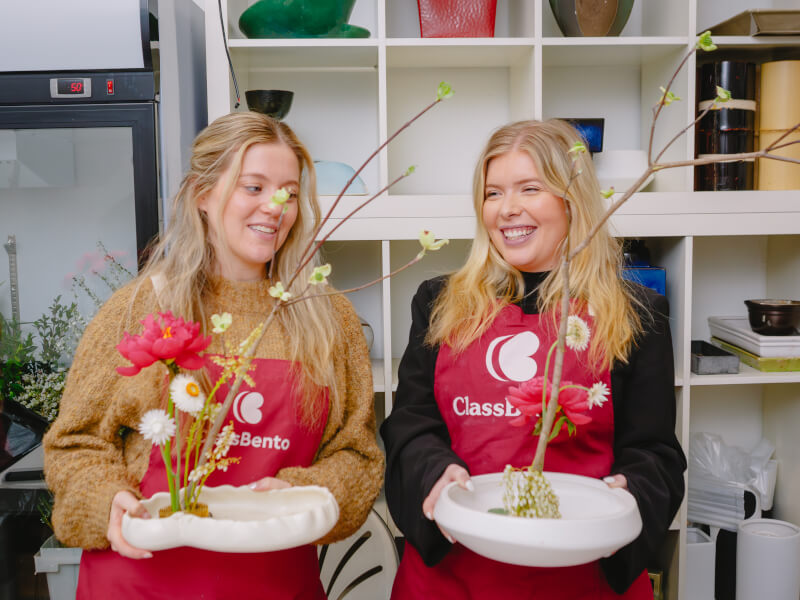
This is one of the best things about booking a Japanese flower arranging class: you leave with your finished arrangement. All the materials – including the container and the seasonal flowers and foliage – are yours to take home. Some classes even provide extra stems so you can keep practising.
Prices for Ikebana classes in London typically range from around £55 to £125 per person, depending on the length of the session, the teacher's experience, and the materials provided. When you consider that you leave with an arrangement, a new skill, and a couple of hours of calm you didn't know you needed, most people feel it's genuinely good value.
Is it a good social craft? What occasions work best?
Yes – and this surprises a lot of people. Ikebana can look solitary and meditative, but in a class environment it's a brilliant social craft. You'll chat while you work, compare arrangements, help each other troubleshoot wobbly stems, and have a proper laugh when someone's kenzan goes rogue. It's the kind of activity that fills a quiet moment or a catch-up with friends perfectly.
It works particularly well for:
- Catch-ups with friends – Swapping the pub for something more memorable.
- Date nights – Creative, calm and genuinely interesting.
- Birthday treats – A thoughtful alternative to dinner and drinks.
- Hen parties – Great for a group that wants something a bit more peaceful (though still fun).
- Team building – A way to connect with colleagues that doesn't involve trust falls.
And unlike some craft nights, you won't leave smelling of resin or covered in clay. You'll leave with flowers. Always a win.
Japanese flower arranging classes worth trying today
Here are three standout options to get you started:


1. Seasonal Ikebana Flower Arranging Workshop, Islington
Led by the Flower Factory in Shoreditch, this seasonal ikebana flower arranging workshop covers the basic principles of Ikebana using beautiful seasonal branches, stems and flowers. You'll take home everything you use plus extra stems to practise at home. The class runs regularly at their Islington studio, and your teacher can even travel to a venue of your choice for private sessions. Priced from £95 per person
2. Japanese Ohara Ikebana Flower Arrangement Class, Manchester
Perfect if you want to dip your toe in before committing to a longer course. This ikebana workshop in Manchester covers one basic-style arrangement following the traditional Japanese flower arrangement curriculum of the Ohara School – one of Japan's three major Ikebana schools. Suitable for complete beginners, with spaces for up to eight guests.
3. Ikebana Zen Flower Arranging Workshop, Bloomsbury
This intimate ikebana zen flower arranging workshop runs every Sunday in Bloomsbury and offers a genuinely tranquil experience. You'll learn the traditional Japanese flower arrangement style and leave with your own Ikebana creation to take home. Open to adults and kids from 8+, and great for individuals and couples alike. Beginner-friendly with no prior experience needed.
Top tips to make the most of your first class
Ready to give it a go? A few quick flower arrangement Ikebana style tips before you do:
- Wear something you don't mind getting a little damp – working with water and stems can get messy.
- Arrive with no expectations – Ikebana is not about perfection. Let go of the idea of making something 'pretty' and focus on the process.
- Take photos – your arrangement will be stunning, and you'll want to remember how you made it when you try it at home.
- Ask questions – your teacher is an expert and will love talking through the technique, history and philosophy behind each choice.
Ready to try Japanese flower arranging classes?
Whether you've been quietly curious for a while or you saw Ikebana pop up on your social feed five minutes ago, the best way to understand it is to get your hands on a kenzan and try it for yourself. All classes on ClassBento are beginner-friendly, fully hosted and genuinely fun – no experience needed, just a willingness to slow down and enjoy the process. Browse all japanese flower arranging classes on ClassBento and find a session near you.

 Runs regularly
 Finsbury Park
 1 to 16 guests
 £78
£78

 9 years in business


 4k followers