 By Dan Ward
In this story:
- Which type of cookery school suits you?
- 1. How a cooking class can change the way you eat at home
- 2. The best cookery schools for complete beginners
- 3. Social cooking classes: best for groups and one-off fun
- 4. Indian and Asian cookery courses: going deeper than the recipe
- 5. Plant-based and healthy cooking classes: practical skills, not just recipes
- 6. Baking and pastry schools: specialist skills worth learning properly
- 7. Professional cookery schools: for those considering a career in food
- Find the right cookery school for you
There are a lot of ways to spend a free weekend, but cooking classes in the UK tend to stick with you in a way that most don't. You leave with a skill, a recipe, and usually a very full stomach. The top UK cookery schools in 2026 range from beginner-friendly one-off sessions to professional programmes that span weeks – and the gap between them is wider than most people realise.
This guide covers the main types of cookery school available across the UK, who each one suits, and what to look for when you're booking. Whether you're after cookery courses for beginners, a one-off experience to give as an unusual cookery gift, or something more serious, there's a format that fits.

Which type of cookery school suits you?
Before booking, it's worth thinking about what you actually want to get out of it. The format of a class shapes the experience as much as the cuisine does.
- Building confidence in the kitchen – A structured technique or skills class is the better choice here. These focus on fundamentals: knife work, heat control, sauce-building, timing. They’re the backbone of most cookery courses for beginners and tend to be taught in smaller groups with more one-to-one feedback.
- A fun social occasion – Group sessions built around a single dish – pasta, dim sum, pizza – work well here. They’re designed to be hands-on and convivial rather than technical, which makes them easy to enjoy without any prior experience.
- Healthy eating and better weeknight cooking – Plant-based and nutrition-focused classes are increasingly well-represented across the UK, covering everything from batch cooking to more specific dietary approaches. These are less about spectacle and more about practical, replicable skills.
- Exploring a specific cuisine – Specialist classes in Indian cookery, Chinese cookery and other regional cuisines go deeper than a generic cooking course. A good one will cover the spice logic, technique and cultural context behind the dishes rather than just the recipes.
- Serious culinary training – If you’re looking at hospitality as a career or want a more rigorous programme, professional cookery schools operate on a different level entirely. These involve structured multi-session courses, often with assessed outcomes.
- A gift or one-off treat – Experience-based classes work best for this. The format is usually self-contained, relaxed and ends with a meal – which makes them among the most satisfying unusual cookery gifts you can give.

1. How a cooking class can change the way you eat at home
The most common reason people book a class is simple curiosity – they want to cook better at home and don’t quite know where to start. A good beginners’ class addresses this directly, covering the fundamentals that most home cooks have quietly been guessing at for years: how to build flavour in layers, when to use high heat and when not to, and why a dish that follows a recipe exactly can still taste flat.
The best approach here is a technique-led session rather than a recipe-led one. Recipes can be Googled; understanding why a sauce reduces, or how to tell when oil is at the right temperature, is what actually transfers back to your own kitchen. ClassBento’s skills-based cooking classes like this knife skills class from the Greenwich Pantry are a good starting point for this, covering knife skills and core techniques across a range of cuisines.
2. The best cookery schools for complete beginners
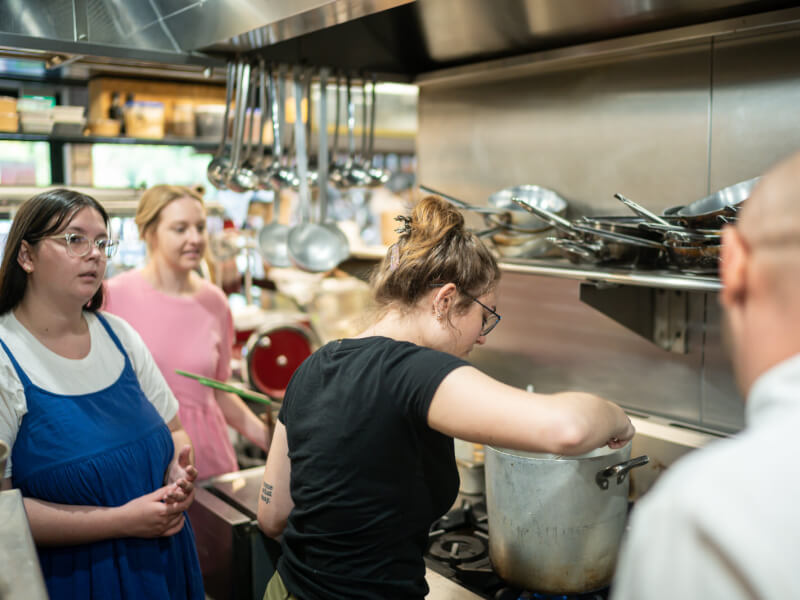
Beginner-friendly doesn’t mean basic. The top UK cookery schools built for people with no prior experience tend to run smaller sessions, give more hands-on instruction and pick dishes that teach genuinely transferable skills rather than just producing something photogenic.
ClassBento’s beginner cooking classes are structured around exactly this: a mix of demonstration and hands-on cooking with experienced teachers and small group sizes. Classes at venues like The Avenue Cookery School in London are designed for people who are as new to the kitchen as they are to the subject, with no assumption of existing knowledge.
For more formal tuition, Leiths School of Food and Wine and Westminster Kingsway College run certificated courses that sit at the more serious end of the beginner spectrum – useful if you’re considering a career change rather than a weekend activity.
3. Social cooking classes: best for groups and one-off fun
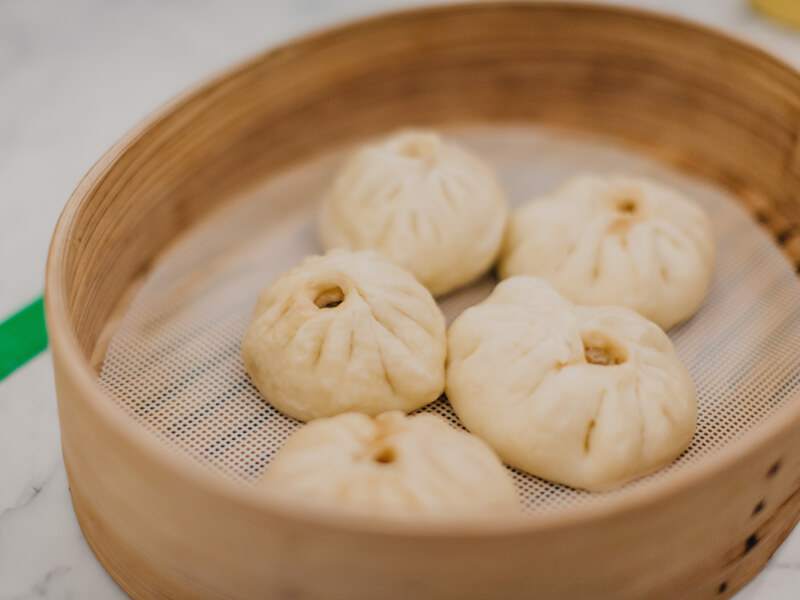
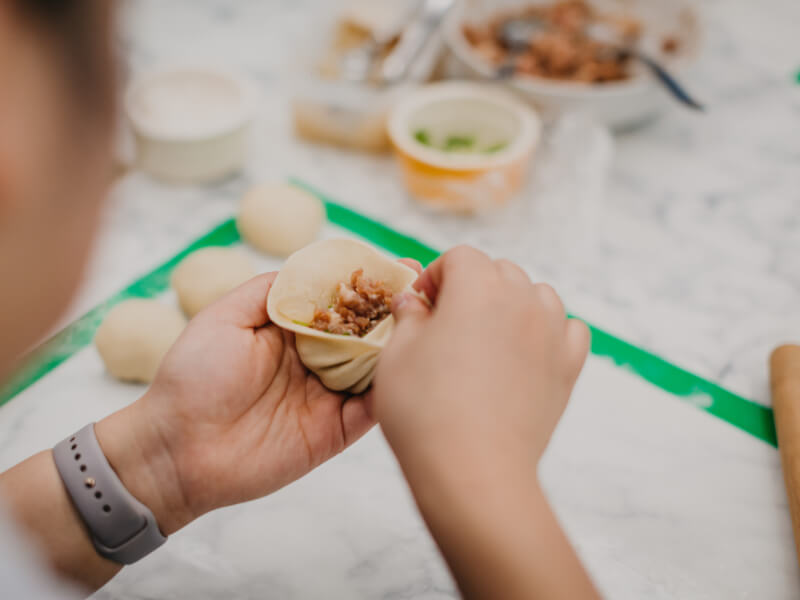
Some of the best cooking sessions are the ones where the dish is almost secondary to the company. Group classes built around a single cuisine – dim sum, pizza, pasta, dumplings – are designed to be shared experiences, and they work particularly well when you’re booking for people who might not think of themselves as "into cooking."
The teacher makes an enormous difference in these sessions. Will, who leads ClassBento’s dim sum cooking class in London, is a case in point – the kind of instructor who makes a two-hour class feel effortless.
Unbelievably fun experience! Will is so funny, and a great teacher. The class felt uplifting and unique, and the recipes/links to useful equipment are all included on a summary email sent to you after the class. Would recommend! Samuel Ratcliffe
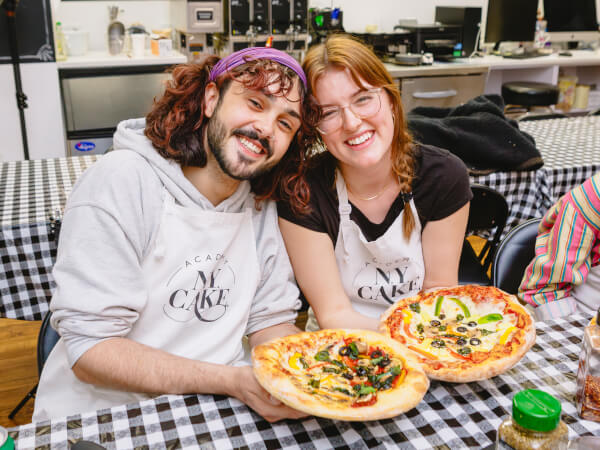
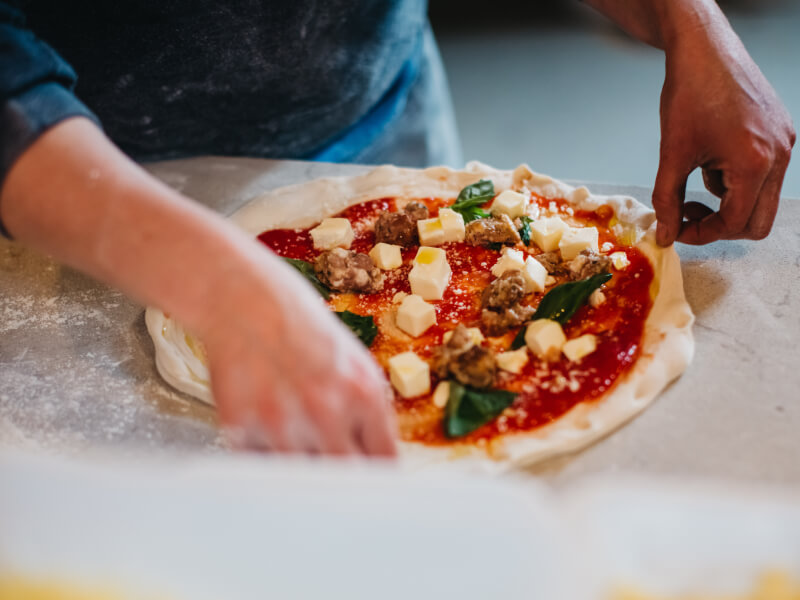
Pizza and pasta sessions follow a similar format: hands-on, relaxed, and structured around a meal at the end. The pizza making class in Manchester led by Giorgio is a good example – he walks you through the real process from dough to oven, covering the difference between a hand-pulled base and what you'd pull from a freezer.
Giorgio was our instructor for the evening, he was engaging, knowledgeable and fun throughout the evening. He showed us how to mix and shape dough to a traditional recipe, how to form the base before toppings are added, and finally we made our own pizza in the main kitchen area! Great experience and the pizza tasted amazing, highly recommended session, lots of fun in a great environment! Carl Goodwin

4. Indian and Asian cookery courses: going deeper than the recipe
A specialist Indian cookery course covers different ground to a generic class. The best ones teach the spice logic that underpins Indian cooking – why you bloom whole spices in oil before adding anything else, how the heat level of a dish is built and controlled, and why the same base can produce a korma or a vindaloo depending on what follows. Once that framework makes sense, the recipes look after themselves.
The same principle applies to Chinese cookery courses, where wok technique and heat control are the real subjects being taught, regardless of what's on the menu. ClassBento has Chinese and Indian cooking classes from cookery schools like London Cookery School and Emerge, covering dishes from Cantonese dim sum and stir-fries through to proper curry bases and regional Indian breads.


5. Plant-based and healthy cooking classes: practical skills, not just recipes
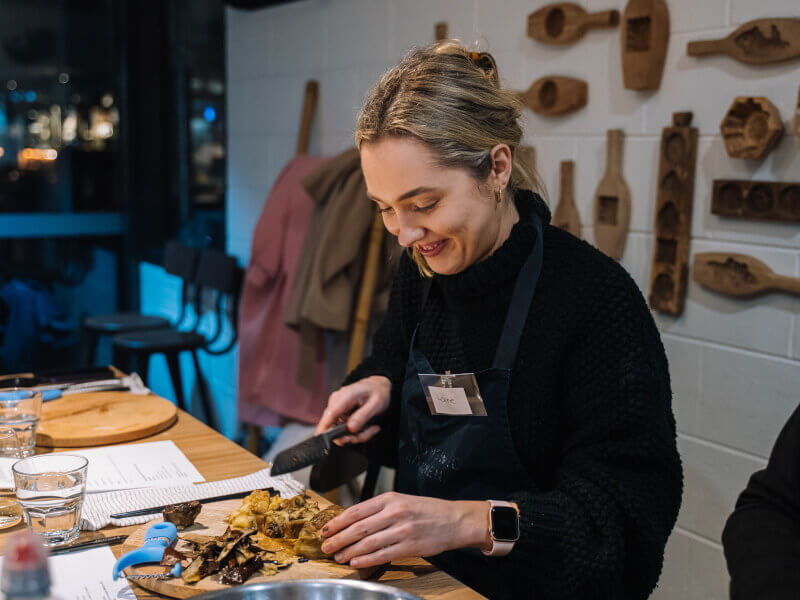
Plant-based cooking classes have come a long way from the slightly earnest health food classes of a decade ago. The better ones now focus on technique – how to build umami without meat, how to make vegetables the centre of a plate rather than a garnish, and how to cook legumes and grains in ways that are actually worth eating.
This format is particularly useful for people who want to eat more healthily but aren't sure how to make the shift without sacrificing flavour. ClassBento’s vegan and vegetarian cooking classes, like those from the London Vegetarian and Vegan School cover everything from plant-based Thai curries to meat-free Indian feasts, with proper flavour-building at the centre of each session rather than compromise.
6. Baking and pastry schools: specialist skills worth learning properly
Baking is one of those areas where the gap between following a recipe and understanding what you're doing is especially wide. Technique matters more than in most other cooking, and small errors – water temperature, gluten development, proving time – have outsized consequences.
A dedicated baking class addresses this in a way that a YouTube tutorial can't, because you have someone watching what you're doing and correcting it in real time. ClassBento runs bread making classes, macaron masterclasses and cake decorating workshops like those from Comptoir Bakery School across the UK, suitable for complete beginners through to people who already bake regularly but want to go further.
At the more serious end, Le Cordon Bleu London and the School of Artisan Food in Nottinghamshire both run specialist pastry and bread programmes – the latter particularly well regarded for sourdough and fermentation.

7. Professional cookery schools: for those considering a career in food
The top UK cookery schools at the professional end of the spectrum operate differently to experience-based classes. Programmes are structured around assessed outcomes, professional kitchen discipline and curriculum breadth. They're not cheap and they're not designed to be casual – but for someone serious about working in food, they provide the kind of credentialled grounding that hospitality employers actually recognise.
If you're interested in the wine and drinks side of things, the WSET (Wine & Spirit Education Trust) runs courses from beginner through to professional Diploma level, and is widely recognised across the industry.
For something in between – more rigorous than a one-off class, less committed than a full programme – ClassBento’s multi-session cooking courses offer a structured way to build skills over several weeks without a formal enrolment process.

Find the right cookery school for you
The top UK cookery schools in 2026 cover every level, cuisine and commitment – from a two-hour pizza evening to a full professional diploma. The most important thing is matching the format to what you actually want from it. Browse ClassBento's full range of UK cooking workshops to find a session that fits.