By Victoria Haynes
In this story:
- What are the main types of printmaking?
- Printing Q&A with Little Lion Studio
- What is lino printing?
- What can you use lino printing for?
- What is cyanotype printing?
- What materials do you need for cyanotype printing?
- What is gelli plate printing?
- Five places to visit for more printmaking inspiration
- Printing workshops to get you started
- Printmaking glossary
Ready to explore a seriously fun new hobby? Then you've come to the right place! Printmaking is an amazing world of hands-on creativity that lets you turn simple ideas into stunning works of art – and the best news is that it’s perfect for everyone, from keen artists to the ‘I’m really not creative’ types!
Get ready to dive in as we demystify printmaking techniques, share some workshop suggestions to get you started and let you hear from a professional printmaker. Strap on that apron and flex those fingers – let’s go!
What are the main types of printmaking?
Relief printing: Carve your way to creative joy!
Get ready to carve out some fantastic art with relief printing! This is one of the oldest and most traditional printmaking techniques: think of it like creating your very own giant rubber stamp! You'll carve away the parts of your block that you don't want to show up in your final design, leaving your image raised. Then, you simply roll ink onto that raised surface, press your paper or fabric on top, and voilà – your image will have been transferred!
Typically Used For
- Strong graphic images
- Bold text
- Intricate patterns
Intaglio printmaking: Dive deep into detail
This technique is basically the opposite of relief printing – here, your image comes alive from lines and areas that are actually cut into the surface. You'll incise or etch your design deep down, and these recessed spots are what hold all that gorgeous ink.
Typically Used For
- Fine rich lines and delicate details
- Detailed illustrations
- Expressive portraiture
- Artistic landscape scenes
Lithography: The magical art of oil and water
Lithography is a clever printmaking technique that works its magic simply because oil and water don't mix! You'll draw your image onto a flat surface (traditionally a special stone, but often modern plates now) using a greasy pencil or ink. Then, when it's inked up, that oil-based ink only sticks to your greasy drawing – the magic of repulsion keeps it off the rest! A quick press onto paper, and your creation is revealed!
Typically Used For
- Subtle tonal changes and painterly effects
- Super fine details
- Art prints that resemble drawings or paintings
- Poster design
- Fine art reproductions
Screen Printing: Push your creativity through!
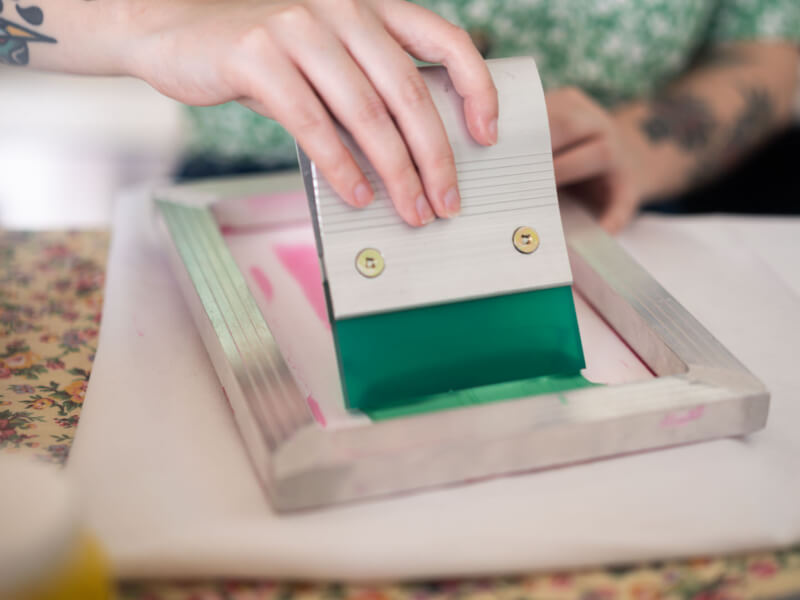
Get ready for some bold and brilliant fun with super versatile screen printing! This method uses a special mesh screen with a stencil on it to block out parts of your design: when you push ink through the open areas of the screen, your image magically appears on the paper, fabric, or whatever you're printing on below!
Typically Used For
- Bold, flat areas of colour and super crisp edges
- Textile printing (custom t-shirts and tote bags, for example)
- Posters
- Bold graphic art
- Commercial signage
Monoprinting: Your one-of-a-kind masterpiece
Ready to make something totally unique? Monoprinting is a fun way to create a print that's genuinely one-of-a-kind! You'll paint or draw your design directly onto a smooth surface, then, you simply press paper onto it to lift the image. Because most of the ink comes off in one go, each and every print is a one-off – a true original every time!
Typically Used For
- Rich textures and expressive brushwork
- Fine art piece
- Experimental art
Printing Q&A with Little Lion Studio
We caught up with professional printmaker Rachel from Little Lion Studio, to chat about lino cutting, the magical world of cyanotype and why gelli plate printing is so accessible.
What is lino printing?
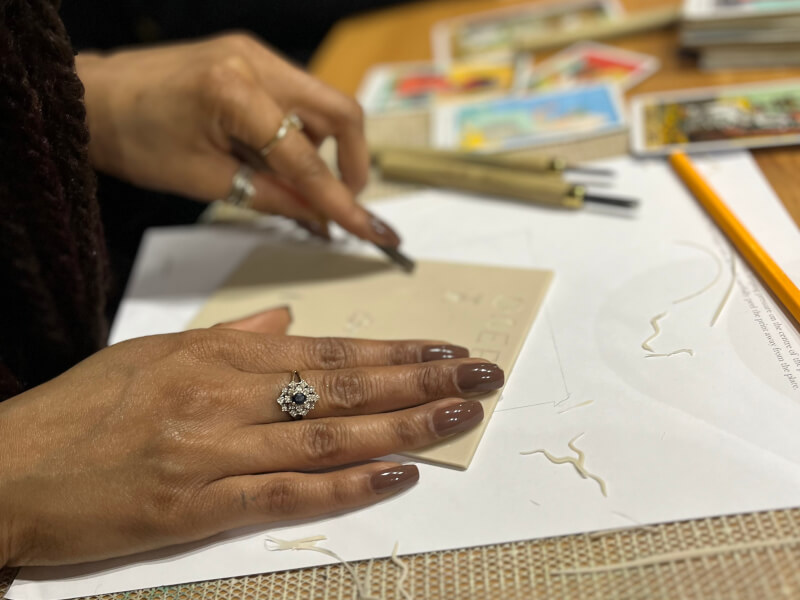
It’s so much fun! It’s one of the most accessible forms of relief printing – which means it’s a brilliant way to dive straight into the vibrant world of printmaking! It’s perfect for beginners.
You start with a block of lino, and using special cutting tools, you'll carve out your very own unique design. The fun part is rolling ink over the top and pressing it onto paper. Then comes the magical reveal: you peel it off to discover your beautiful print! It's a super satisfying process that's perfect for creating your own masterpiece – whatever your experience level.
Lino printing tends to be the most popular, and it’s the one most people have done at school. People also ask where to buy materials, and whether they need to be able to draw to join in. The answer to that one is no, you don’t need to be able to draw at all! Rachel, Little Lion Studio
What can you use lino printing for?
While lino cutting is traditionally a fine art technique, its bold nature and simplicity make it perfect for so much more!
Here's where lino printing really shines:
- Custom textiles and fabric: With the right inks, you can print your designs onto tote bags, tea towels, aprons, t-shirts, or even create your own bespoke fabric for sewing projects!
- Unique stationery: You can create your own greeting cards, gift tags, invitations, and wrapping paper – perfect for birthdays, the festive season and even weddings.
- Original art: Lino printing is a fantastic medium for creating striking wall art. Its strong lines and bold contrasts make gorgeous eye-catching pieces that are perfect for framing and displaying in your home. All your gallery wall dreams can come true!
What is cyanotype printing?
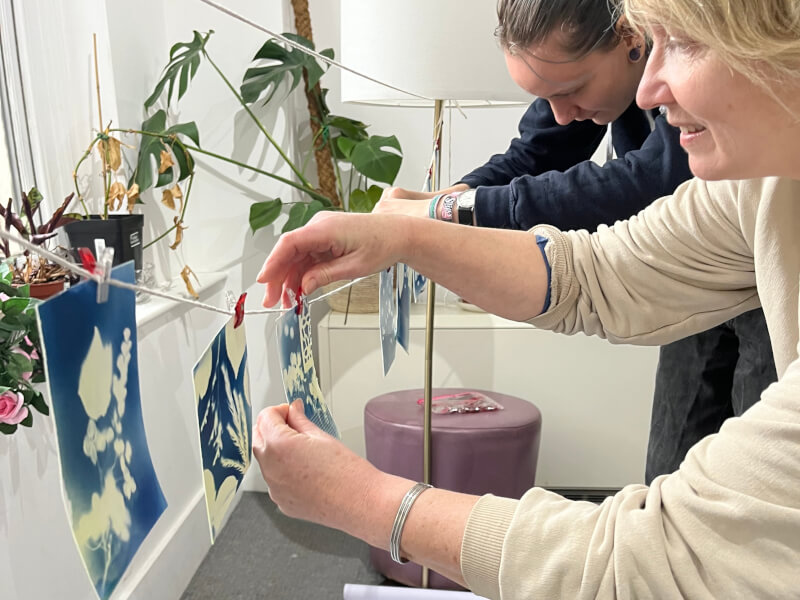
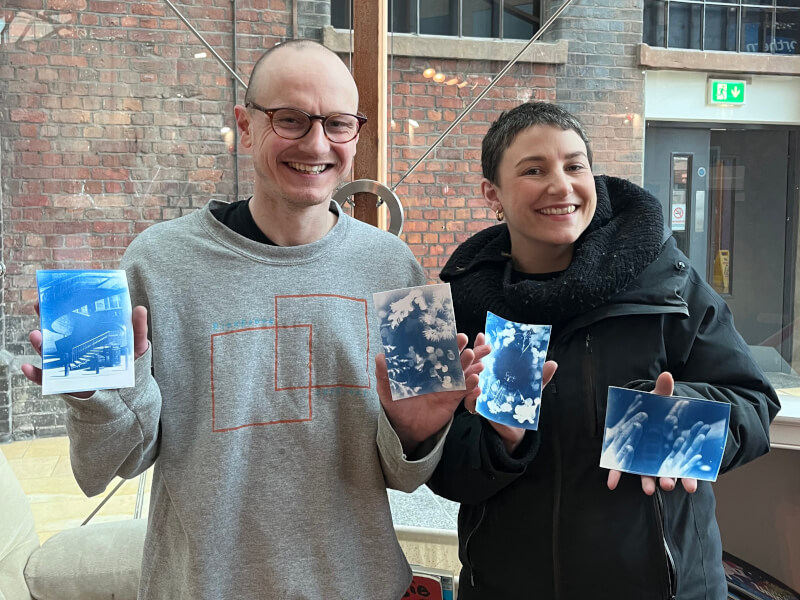
It's one of the oldest and most magical forms of alternative photography! You'll mix two special iron solutions together in the dark, which then react to form a stunning Prussian blue colour when exposed to ultraviolet light.
You simply paint the solution onto your paper or fabric and leave it to dry overnight in the dark. The next day, when you're ready to print, lay objects over the top – think beautiful pressed flowers, leaves, feathers, or even photographic negatives – then expose it to UV light, either using good old sunshine or a special UV lamp.
Finally, you rinse your creation in water to develop and fix the image. The result is a gorgeous, ethereal blue print that's truly one of a kind! It's a fantastic, creative way to capture the beauty of nature or your favourite memories.
I’d say my most popular class is the botanical cyanotype, where we use dried or fresh flowers, depending on the time of year and the location. It’s all about experimentation, breaking the rules, building confidence, and seeing people go home proud of something completely new that they’ve made. Rachel, Little Lion Studio
What materials do you need for cyanotype printing?
Getting started with cyanotype is a breeze, and you might even have some of the kit already! Here’s what you’ll need to create your beautiful blue prints:
- The magic ingredients: You’ll need the two special cyanotype chemicals, and something to apply them with: a paintbrush works brilliantly, but you could even use a sponge on a stick. For a more abstract and creative effect, some people like to just flick the solution onto their surface!
- Your canvas: Paper or fabric is the perfect base for your cyanotype creation.
- Light-blocking objects: This is where the fun really begins! You'll need objects to lay on your coated paper or fabric to block out the light and create your design: pretty much anything goes here, from natural elements and botanicals to textured fabrics like lace and even everyday household items. Let your imagination run riot!
- UV light and water: Finally, you just need a source of UV light and a water source to rinse your print. You can go the eco-friendly route and use sunshine or, if you're in the UK and the sun is hiding, a simple UV torch or a UV party light will work a treat!
What is gelli plate printing?
It’s a super accessible method of monoprinting for creating one-of-a-kind designs, where you use a special, gel-like plate (which you can buy in squares or rectangles) as your canvas.
The best part is that you don’t need special inks for this technique; just roll some acrylic paint onto the plate, and then get creative by stamping, drawing, or adding texture to it. When you're ready, simply press your paper over the top to lift your design and viola!
It's fantastic for all ages, especially for kids, because you can build up amazing layers of colour so quickly. Plus, you don't even need special paper – cartridge paper works a treat! It's all about instant gratification and creating beautiful, unique art in a flash.
Five places to visit for more printmaking inspiration
1. Established in 1880, the Royal Society of Painter-Printmakers in London can be found in the Bankside Gallery, next to the Tate Modern. They're open daily from 11am-6pm when an exhibition is on, and their Instagram is definitely worth a follow!
2. If you're keen to dive into the history behind printmaking, the Norwich Printing Museum has an impressive collection of working presses from the last 500 years – and you can even have a go!
3. The V&A Museum in London boasts a huge collection of printed artworks, from wallpaper and posters to Japanese woodblock prints, fashion plates and commercial graphics.
4. For anyone in Scotland, Edinburgh Printmakers are a studio space and gallery that host both virtual and in-person exhibitions – so you can look at some gorgeous prints without even leaving your house!
5. London Craft Week is a festival which runs annually in May, and is a celebration of some of the finest artists, crafters and makers. You can see plenty of printmakers in action, but also immerse yourself in the wonderful world of craft – who knows, you might end up with more than one new hobby!
Printing workshops to get you started


London
Introductory printmaking class from Lavender Print School in Battersea
Gelli printing workshop from Anahata Trading Ltd in East Ham
Flower pounding on tote bags workshop from Make Your Own in Southwark
Poster printing workshop from Pigment Press in Shepherd’s Bush
Tetrapak printmaking workshop from We Make Books! in Stoke Newington
Manchester
Cyanoptype printmaking workshop from Little Lion Studio in central Manchester
Gelli plate printing workshop from Little Lion Studio
Multi-block linocut workshop from Little Lion Studio
Kitchen lithography from Hope Press in Stockport
Collograph printmaking workshop from Little Lion Studio
Birmingham
Lino cutting and printing workshop from The Crafts Collective in the Jewellery Quarter
Gelli plate printing for beginners from Feltworld Creative Arts in Stafford
Bristol
Gellplate printing for beginners from Little Leaf Press in Staple Hill
Multicolour ‘jigsaw’ linoprinting workshop from Little Leaf Press
Dry point etching workshop from Little Leaf Press
Beginners lino printing workshop from Safa Aslam in Redfield
Edinburgh
Gel printing beginners workshop from Arienas Collective in the New Town
Summer lino printed tote bag from The Edinburgh Craft Club in Abbeyhill
Geometric lino printing workshop from The Edinburgh Sewcial Club in Meadowbank
Introduction to printmaking course from Constantine the Artist in Meadowbank
Alternatively, browse our full range of beginner-friendly printmaking classes across the UK, and see what catches your eye!
Printmaking glossary
Barren: A smooth, handheld tool, often circular, used to apply pressure by hand. It's perfect for when you don't have a press or for smaller prints, helping you rub the back of the paper to transfer the ink.
Block / plate: This is the hard surface you create your image on. Depending on the technique, it could be a block of wood, linoleum (for lino printing), a metal plate, or a smooth stone.
Brayer: A small hand-held roller used to spread an even layer of ink over your block or plate. It’s a printmaker’s best friend!
Carving tools: These are the sharp, specialised tools used to create your design on the block or plate. They come in different shapes and sizes to make different marks, from fine lines to broad scoops.
Edition: A set of identical prints pulled from the same block. Printmakers will often number them (e.g., "1/10" means print number 1 out of a total of 10), and they will also often sign them.
Fixing: The process of making your print permanent. In some cases (like cyanotype), it involves rinsing the print in water. In others, it’s simply allowing the ink to dry completely.
Ghost print: The second, lighter print you can pull from a block without re-inking it. It’s a softer, more subtle version of your original design and is often considered a unique work of art in itself.
Ink: Not just any old paint! Printmaking inks are specially formulated to be thick and sticky, which helps them transfer cleanly from the block to the paper.
Press: A machine that applies pressure to push the paper onto the inked block. It helps transfer the image perfectly. For many techniques, you can also use a spoon or a baren to rub the back of the paper by hand.
Proof print: This is one of the first prints you pull from your block or plate. You use it to check your design, see if you need to make any changes, and make sure everything is working as it should.
Register: This refers to lining up your block and paper perfectly, especially when printing multiple colours. It ensures each colour layer lands in the right spot on the paper.