 By Amy Brown
In this story:
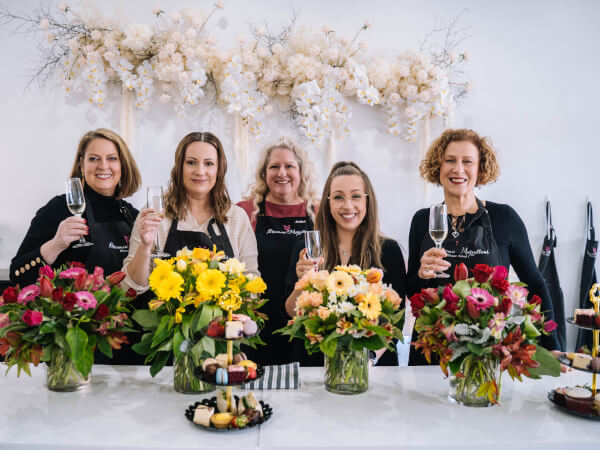
If you’re anything like me, you’ll have seen tons of perfume-making videos online lately and I couldn’t wait any longer to try it myself! It’s never been easier to give it a go with ClassBento’s selection of perfume making classes across the UK. For International Women’s Day 2026, we celebrated by gathering our passionate and talented Manchester-based teachers for a special event to honour the incredible women who define our platform.
And what better way to connect and get creative than a natural perfume making class? Guided by the expert tutelage of Lizzy from Cedar Lifestyle who are renowned for being a symbol of tranquility and self-care, she shared her love and knowledge of perfume and all things natural.
It completely changed the way I think about fragrance as I spent the evening learning how to create custom perfume from scratch – blending essential oils, experimenting with scent combinations and chatting with other curious beginners. If you’ve ever searched for a perfume making workshop near me, this is exactly what you’ve been looking for! Let’s break it all down together.

What actually happens at a DIY perfume workshop?
After settling in and getting familiar with the set up, I thought we’d jump straight into mixing oils. But the class began with a lovely introduction to the foundations of perfume making, and the traditions behind this timeless craft.
Lizzy, an experienced aromatherapist who has spent years working with natural fragrances, walked us through the basics of scent structure. Instead of complicated chemistry, she explained fragrance in a simple way anyone could understand:
- Top notes: The fresh scents you smell first (often citrus or light herbs)
- Middle notes: The heart of the perfume, which gives it personality!
- Base notes: The deeper scents that help the fragrance last longer.
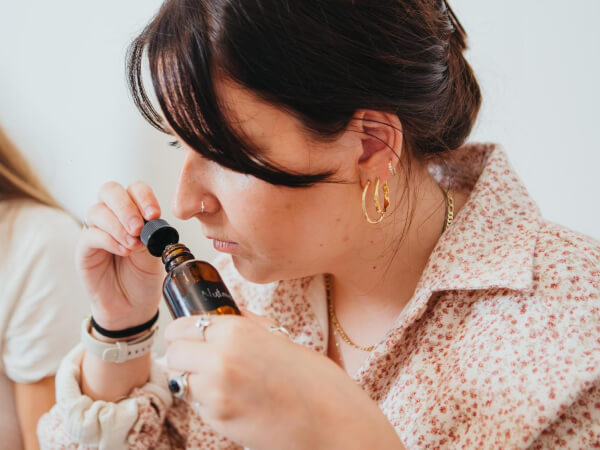
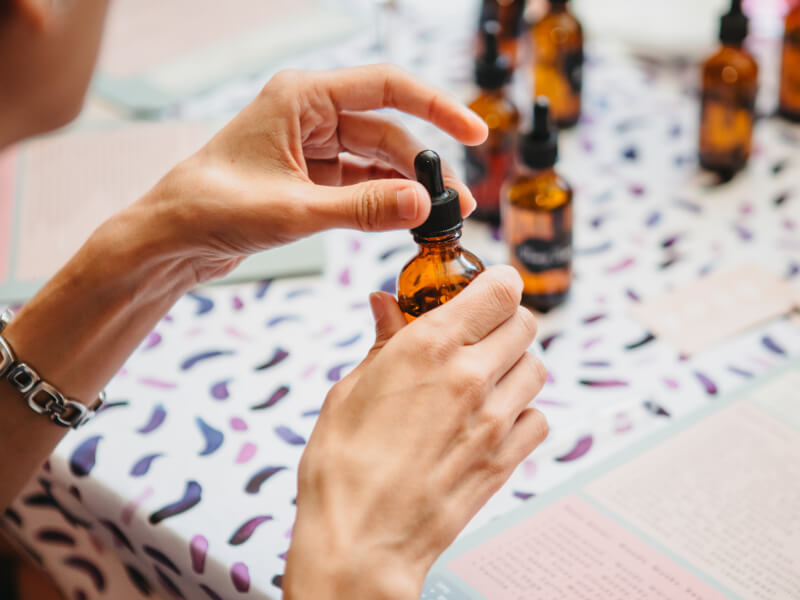
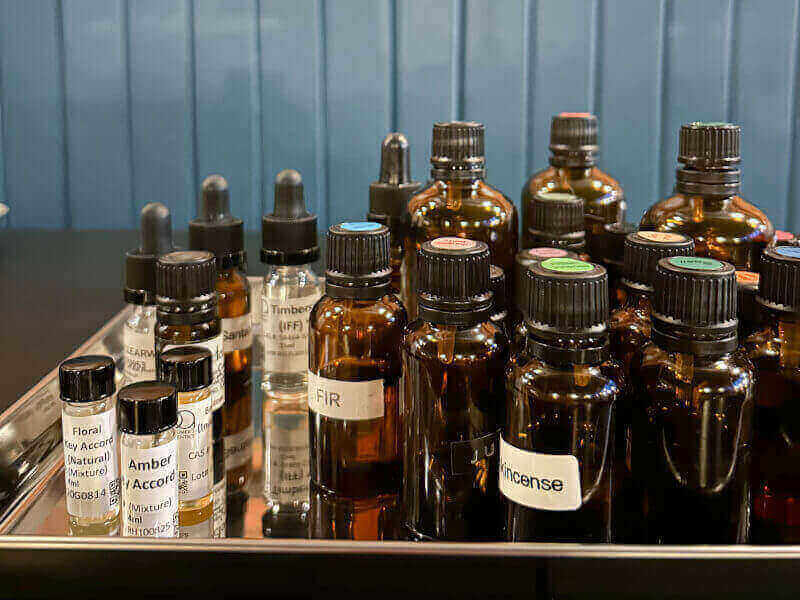
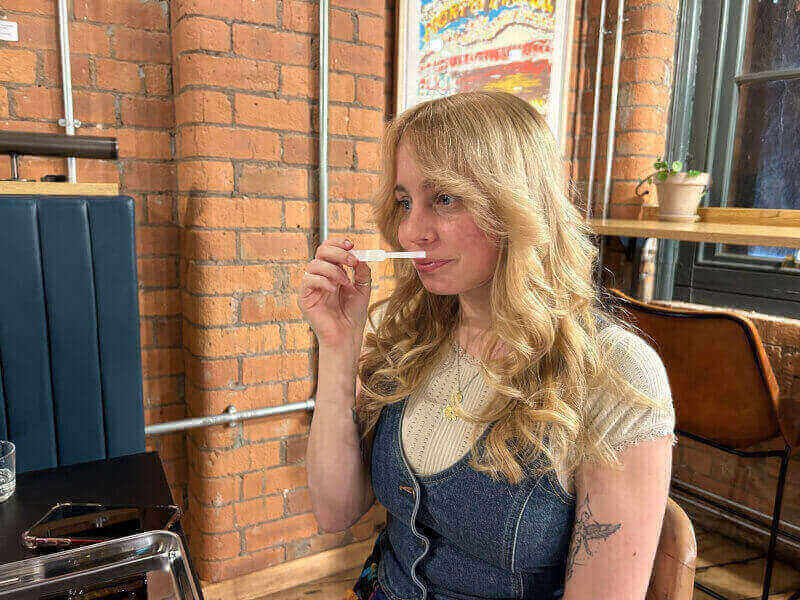
With that in mind, we started experimenting as Lizzy gave out scent strips to test our noses, while explaining the differences between natural and artificial scents. Then we jumped straight in with exploring the scents on offer. Small glass bottles filled the table: lavender, bergamot, sandalwood, patchouli and sweet apricot, among many others!
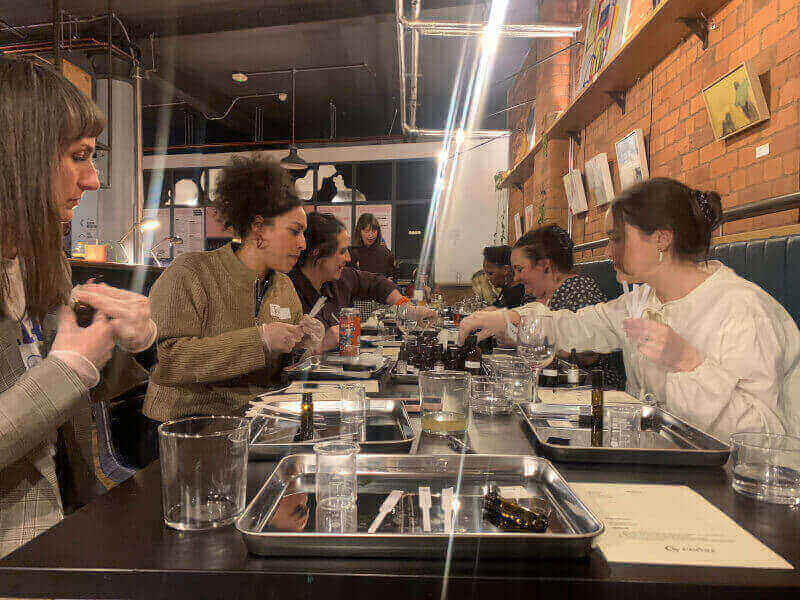
The best part? There were no wrong combinations. Everyone in the room was encouraged to explore, smell, and adjust their blends until they found something they loved. I experimented in my little glass dish with apricot, timbersilk and tiny dashes of rose and lavender to create a sweet, sleepy scent. We finished by pouring our scents into bottles to take home, with the cutest label to give our fragrances a name.
Why making your own perfume is surprisingly beginner-friendly
One of the biggest things I realised during the workshop is that DIY perfume making is incredibly accessible – even if you’ve never tried anything like it before.
Instead of complicated formulas, Lizzy shared a simple structure for blending oils. Within minutes, everyone had started experimenting with their own DIY homemade perfume.
The class provided everything we needed:
- A wide range of essential oils to experiment with
- Perfume bottles and pipettes for mixing
- Scent strips for testing out smells!
- Almond oil for blending
- Guidance from an experienced teacher
Some blends were light and citrusy, others were deeper and more earthy. It was so interesting to see how the same ingredients for homemade perfume could lead to completely different results depending on the ratios people chose (I might have been a bit heavy-handed with the apricot – a happy accident!)
Learning the basics of natural fragrance
Another highlight was discovering how easy it is to create an all natural perfume recipe using the most simple ingredients. I always thought that perfume required a big ingredients list (most likely artificial), but this class focused on using botanical and natural oils to get gorgeous results.
For anyone interested in making a homemade organic perfume, the process is refreshingly simple:
- Choose a base oil such as jojoba or sweet almond oil.
- Add essential oils in a top–middle–base structure.
- Adjust the ratios until the scent feels balanced.
- Let the perfume rest so the aromas can blend together.
It was a lovely chance to create something completely unique, instead of relying on another expensive store-bought perfume – it always feels extra special when you’ve made it yourself!
The trend everyone was talking about: scent stacking
Another aspect of perfume making I was curious about is scent stacking. Instead of relying on a single fragrance, scent stacking is the art of layering multiple complementary perfumes to create a signature scent. It’s become a huge trend recently, with Pinterest Predicts citing it as a budding trend – and for good reason! It makes perfume feel more playful and tailored and it makes perfume feel much more playful and creative.
Once you understand how fragrance notes work, layering scents becomes much easier, such as:
- Fresh citrus perfumes can be layered with floral blends to brighten them!
- Warm vanilla or sandalwood bases help scents last longer – compliments guaranteed.
- Herbal or green notes add depth to lighter fragrances.
This technique also makes it easier to create long lasting summer perfumes, because deeper base notes can anchor lighter, seasonal scents. And honestly, once you start experimenting, it’s hard to stop!
Why take a class instead of buying perfume?
Before attending the workshop, I wasn’t sure how easy making my own perfume would be – but it was so simple and fun! And the highlight for me was learning in a group setting. A good DIY perfume workshop offers things you simply don’t get when buying perfume in a shop:
1. Expert guidance.
Our teacher explained how fragrances behave, which made experimenting far less intimidating.
2. A huge range of oils.
Most people don’t own dozens of essential oils at home (if you do, I’m jealous), but workshops give you access to a wide scent library.
3. A social experience.
Everyone at the event was sharing blends, swapping ideas and helping each other refine scents.
4. A completely unique fragrance.
No two perfumes were the same, which made the final result feel far more meaningful.
Perfume classes you can try yourself
If I’ve made you curious enough and you’re searching for “perfume classes near me,” try it yourself with our gorgeous range of workshops across the UK that offer fun, beginner-friendly experiences.
We think you’ll love:
- Perfume making class with essential oils in Whitechapel, London – Learn how to blend the best essential oils to make perfume and go on a sensory journey.
- Perfume making class in Manchester – A relaxed workshop where you’ll design three scents using natural ingredients.
- Natural therapeutic perfume making workshop in Edinburgh – A mindful, beginner-friendly class focused on scent blending and perfume design.
My honest verdict
This DIY perfume workshop was a lovely introduction to the art of fragrance and I recommend it to anyone curious about perfume making. It taught me how perfumes are structured, how essential oils interact and how easy it can be to design a scent that reflects your own unique personality.
More importantly, it reminded me that creativity doesn’t have to be complicated! Sometimes, all it takes is a few beautiful oils, a relaxed atmosphere and a little curiosity.
If you’ve ever been tempted to try DIY homemade perfume or experiment with homemade organic perfume, a creative workshop is the perfect place to start. You’ll learn practical skills, meet other creative people and leave with a fragrance that’s completely your own – find the perfect class to suit you and try this mindful, sensory craft for yourself. I don’t think I’ll ever look at perfume the same way again!