By Dan Ward
In this story:
- 1. They make memories that actually stick
- 2. They unlock a creative side they didn't know they had
- 3. They teach a real, usable skill
- 4. They flex to fit the person
- 5. They're the kinder option for the planet
- 6. They're a brilliant thing to do together
- 7. They don't add to the clutter
- 8. They support real makers and small studios
- How to choose and gift an experience well
- The short version
In 2026, it's time to get creative with your gift-giving! Swap out the usual gadgets and clothes for something that’ll create lasting memories – one of our unique experience gifts in the UK! Whether it's a pottery class, a knife skills session or an afternoon of bookbinding, an activity gift sticks in a way a parcel doesn't. Below are eight reasons to give an activity instead of a present, plus a section at the end on how to actually pick and gift one well — because the experience itself is the easy bit; getting it right for the person you're buying for takes a bit more thought.
1. They make memories that actually stick
The honest truth about most material presents is that you forget where they came from within a year. A jumper becomes a jumper. A speaker becomes a speaker. But the day someone spent learning to throw a bowl, or shaping silver into a ring, or making a candle that smelled exactly the way they wanted it to — that they remember. That's the core argument for activity gifts: the present isn't the thing they leave with, it's the afternoon they spent making it.
There's also a 'gentle nudge out the door' quality to these gifts. Booking someone a class is a small invitation to try something they probably wouldn't have booked themselves. ClassBento crafter Rosie Telling was given a silver ring making class in London from artisan Ana Meneses — a working silversmith who's been teaching jewellery in the city for years — for her birthday, and said:
This was a present for my birthday and I'm so glad to have been gifted it. Ana was lovely and the class was really informative, and she made sure to explain everything really well. I would definitely recommend this course to anyone interested in jewellery making!
People rarely book themselves into something new — but they'll happily turn up to it when someone else has done the booking for them.
2. They unlock a creative side they didn't know they had
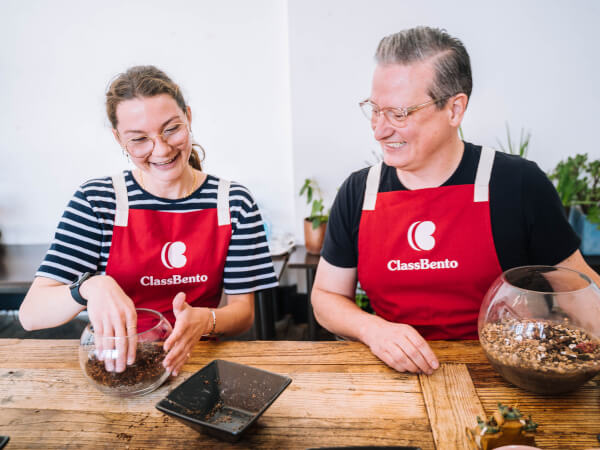
A lot of adults haven't done anything properly creative since they were kids — work, life, errands, repeat. One of the underrated benefits of doing a workshop together (or alone, gifted) is that it gives someone permission to be a beginner again, in a low-stakes setting, with a teacher who's seen every level of skill walk through the door.
The framing matters: a class isn't a test. There's no exam at the end. You're there to mess about with clay or paint or yarn for a few hours and walk out with something handmade. Whether it's painting in Glasgow, throwing pottery in Bristol, or arranging flowers in Edinburgh, the format does the heavy lifting — your friend or partner doesn't need to be 'creative' to enjoy it.
ClassBento crafter Harriet Davies booked herself onto an aromatherapy candle workshop in Manchester from Cedar Lifestyle — a maker with a background in perfumery who runs small-group classes — and told us:
I loved it! I've been interested in candle making for a while, but I was worried about how technical it was going to be. We got a really good idea of essential oils that work well together, and the balance / flash points. It was a lovely chilled and friendly environment, and I walked away with a gorgeous candle. Thank you!
The 'I was worried about how technical it was going to be' line is a useful one to keep in mind when you're shopping for someone. Most people are. A good class designs around that.
3. They teach a real, usable skill
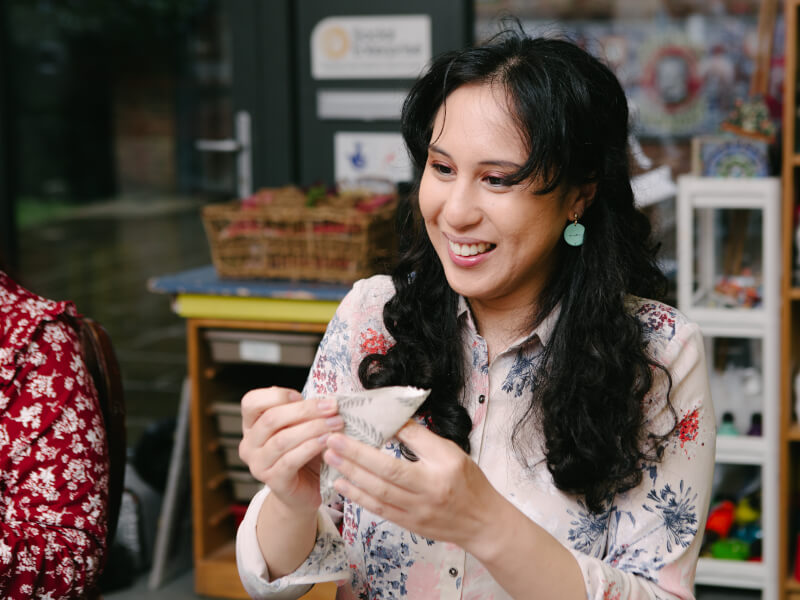
The other thing material gifts can't do: teach you something. Activity gifts can. Whether dad fancies woodcarving in a hands-on woodwork class in Edinburgh, or your best mate would like to sharpen up their baking at a bread-making workshop in Cardiff, your loved one walks out of the session knowing how to do something they didn't know how to do that morning.
That covers a wide spread: jewellery making, cocktail shaking, candle making, mindfulness meditation, sushi rolling, knife skills, watercolour, calligraphy, ceramics. The skill might become a hobby. It might just be a one-off afternoon they remember fondly. Either way, they leave with more than they came in with — which is one of the cleanest alternatives to material presents you can offer.
4. They flex to fit the person
Two things that are often pitched separately — variety and personalisation — are really the same point. The reason activity gifts work as personalised presents is that the catalogue is enormous. Foodie? Pasta-making class, sushi masterclass, gourmet cooking. Outdoorsy? Foraging walks, garden design, kokedama. Crafty? Pottery, tufting, kintsugi, bookbinding. Drinkers? Cocktail mixology, wine tasting, gin distilling.
A good activity gift looks at the person you're buying for and matches the class to a real interest of theirs. That's what separates a thoughtful gift from a generic one — not the price tag, but the fit. Get the fit right and you've shown them you actually pay attention, which is most of what gift-giving is about anyway.

5. They're the kinder option for the planet
If you're trying to lighten your environmental footprint, an activity gift is doing well on that front. There's no packaging, no shipping, no plastic, no eventual landfill. You're paying for someone's time and skill, and the only physical output is whatever the recipient makes — usually small, often beautiful, almost always kept.
Plenty of the workshops on ClassBento are explicitly built around sustainable practice too. The Kanzashi flower workshop from Art4Space in London works almost entirely with fabric upcycling. Cooking sessions tend to lean on local, seasonal ingredients. Pottery classes reuse trimmings. It's not the headline reason to book one, but it's a quiet bonus.


6. They're a brilliant thing to do together
Most material gifts are for one person. An activity gift can be for two. Booking a class for you and the recipient — your partner, your sibling, your best mate — turns the present into something you both do. That's a different category of gift, and one of the better meaningful gift ideas for adults UK-wide if the relationship matters more to you than the transaction does.
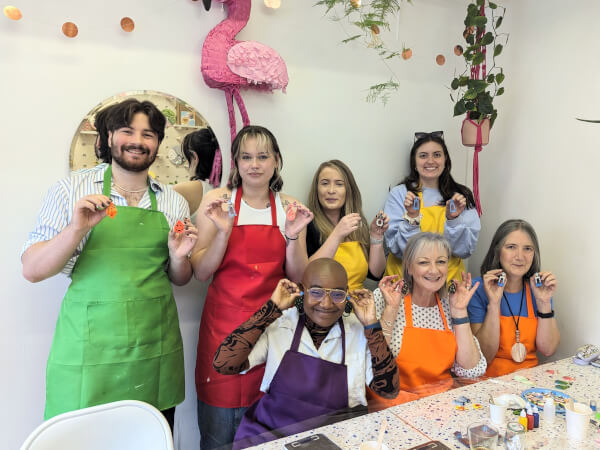
Family cooking classes, partner pottery sessions, mum-and-daughter floristry, group cocktail nights — they all work. You're not just giving someone an afternoon, you're giving yourselves a shared one. People remember those.

7. They don't add to the clutter
Most homes have plenty of stuff in them already. The case for an activity gift over a material one isn't anti-stuff — it's just that the recipient doesn't need another mug, another candle, another scarf. They might enjoy a morning of bookbinding more than they'd enjoy a third mug.
There's a practical edge to this too: activity gifts are easy to send. Most teachers on ClassBento offer digital vouchers, which means no wrapping paper, no shipping, no last-minute panic. The recipient picks the date that suits them. (More on how to send a digital voucher well in the next section — there's an art to making it not feel like a forwarded email.)
8. They support real makers and small studios
Every class on ClassBento is run by an independent maker, artist, chef or instructor — usually working out of their own studio, often running a small business alongside the teaching. When you book a class as a gift, the money goes to a person, not a corporation. That's the potter in Bristol, the silversmith in Hackney, the cocktail bar in Manchester, the floristry studio in Edinburgh.
If 'shop local, support small' is something that matters to you, an activity gift is one of the more direct ways to do it. The recipient gets the class; the maker gets the work; the money stays in the creative economy rather than disappearing into a global supply chain.

How to choose and gift an experience well
Most articles on this topic stop at the 'why.' The 'how' is where people actually get stuck. Here's the practical version.
- Match the budget to the relationship. A rough guide: under £40 for a casual gift (a friend's birthday, a thank-you), £40–£80 for the bulk of mid-tier gifts (most partners, parents, siblings), £80+ for milestone occasions (anniversaries, big birthdays, weddings). Going higher than the relationship warrants can feel awkward; going lower can read as an afterthought. The sweet spot for most class gifts sits in the £45–£100 range, which covers most of ClassBento's catalogue.
- Book early around peak periods. Christmas, Valentine's Day, Mother's Day and Father's Day are the four big spikes. Popular classes — pottery, candle making, anything chocolate-related around February — fill up four to six weeks ahead for these dates, sometimes longer in London. If you're shopping inside that window, a flexible voucher (see below) is your friend.
- Specific class vs flexible voucher. Pick a specific class when you know the person well enough to be confident in the choice — a partner, a close friend, a sibling whose tastes you can call. Pick a flexible voucher when you don't, when their schedule is unpredictable, or when you want them to enjoy the picking themselves. There's no shame in a voucher; the recipient often prefers it.
- Present a digital voucher properly. A forwarded email reads as a forwarded email. Print the voucher on decent card, slip it inside a real envelope, and write a note by hand. Or pair it with a small physical thing that hints at the class — a bag of coffee with a barista course, a tea towel with a cooking class, a single flower with a floristry voucher. Two minutes of effort turns a digital voucher into a proper gift.
- Check accessibility before booking. Most studios are step-free, but not all. If you're gifting to someone with mobility, dietary or sensory needs, a quick message to the teacher in advance saves any awkwardness on the day. Teachers are almost always happy to accommodate when given notice.
The short version
Eight reasons in, the case mostly makes itself: activity gifts stick, they teach something, they flex to the person, they don't clutter the place up, and they support someone real. The 'how' matters as much as the 'why' though — pick a class that fits the recipient's actual life, book it early enough, and present it like you mean it.
If you're ready to browse, our full range of experience gifts UK-wide covers most cities and most interests. Pick one, write the note, send the envelope. That's the whole job.